
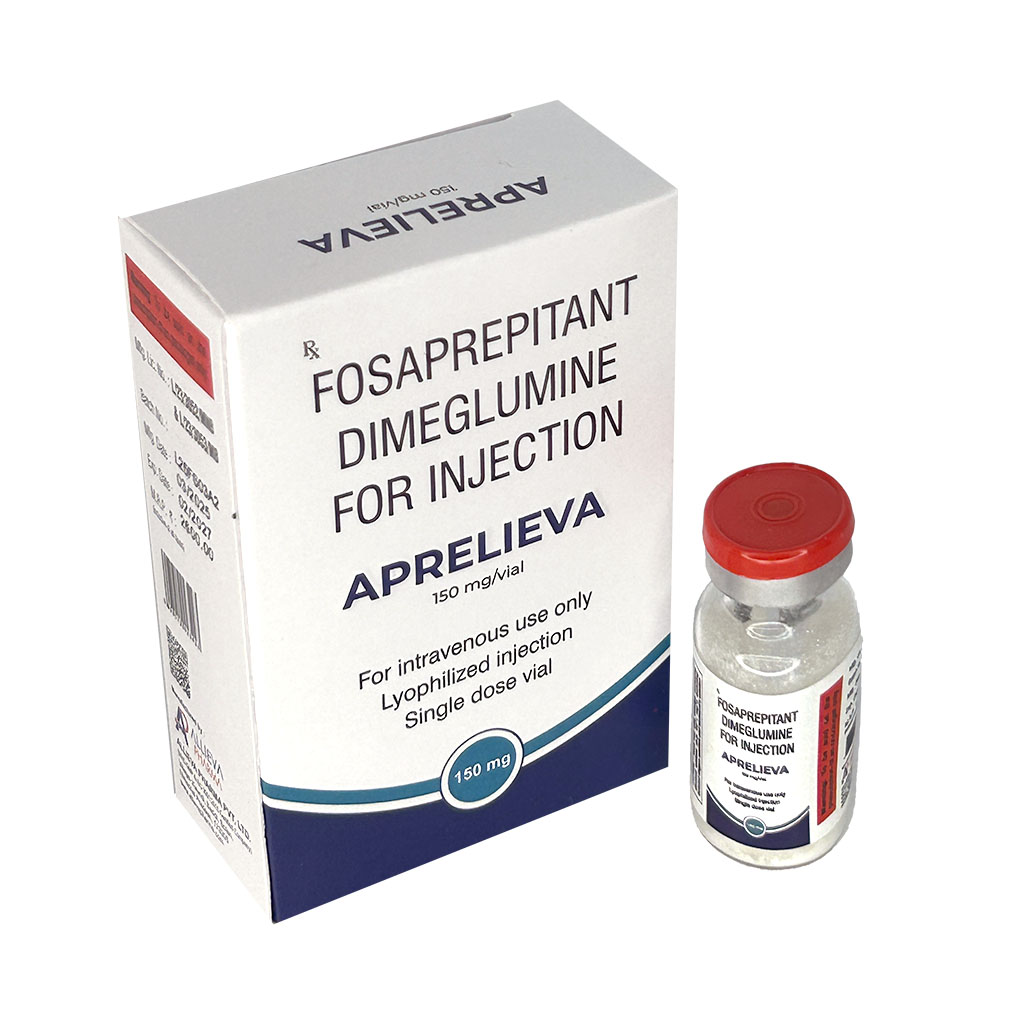

APRELIEVA 150MG is an Injection medication used for treatment purposes. It is manufactured by Allieva Pharma Private Limited.
| Brand Name | APRELIEVA 150MG |
|---|---|
| Composition | Fosaprepitant Dimeglumine for Injection 150 mg |
| Manufacturer | Allieva Pharma Private Limited |
| Dosage Form | Injection |
| Packaging | Vial |
| Country of Origin | India |
APRELIEVA 150MG (Fosaprepitant Dimeglumine for Injection 150 mg) is a widely used Injection medicine manufactured by Allieva Pharma Private Limited. It is commonly prescribed for...
APRELIEVA 150 MG (Fosaprepitant Dimeglumine for Injection 150 mg) is a prescription antiemetic medicine used to prevent chemotherapy-induced nausea and vomiting (CINV) and postoperative nausea and vomiting (PONV). It contains Fosaprepitant Dimeglumine 150 mg, a prodrug that is rapidly converted into aprepitant in the body. The medicine works by blocking neurokinin-1 (NK1) receptors in the brain, helping prevent nausea and vomiting associated with cancer treatment and surgical procedures.
Nausea and vomiting are among the most common and distressing side effects experienced by patients undergoing chemotherapy. These symptoms can significantly affect quality of life, nutritional intake, treatment adherence, and overall recovery. APRELIEVA 150 MG is specifically designed to help reduce the occurrence and severity of these symptoms, enabling patients to continue their treatment with greater comfort and confidence.
Unlike traditional antiemetic medicines that primarily target serotonin pathways, Fosaprepitant works on the substance P/NK1 receptor pathway, providing additional protection against delayed nausea and vomiting that may occur several hours or days after chemotherapy.
APRELIEVA 150 MG is commonly used in:
• Chemotherapy-Induced Nausea and Vomiting (CINV)
• Highly Emetogenic Chemotherapy Regimens
• Moderately Emetogenic Chemotherapy Regimens
• Postoperative Nausea and Vomiting (PONV)
• Supportive Cancer Care Programs
• Oncology Treatment Protocols
• Hospital and Specialty Care Settings
The medicine is often administered as part of a combination antiemetic regimen alongside other medicines such as serotonin receptor antagonists and corticosteroids to provide comprehensive nausea and vomiting prevention.
Manufactured under strict pharmaceutical quality standards, APRELIEVA 150 MG is designed to provide reliable therapeutic performance, safety, and consistency. The injection should only be administered by qualified healthcare professionals in hospitals, oncology centers, or specialized treatment facilities.
Patients receiving Fosaprepitant therapy may require monitoring for infusion-related reactions, allergic responses, and overall treatment tolerance. Healthcare providers carefully evaluate patient needs to ensure optimal supportive care during chemotherapy or surgery.
Due to its effectiveness in preventing chemotherapy-related nausea and vomiting, APRELIEVA 150 MG has become an important component of modern oncology supportive care programs worldwide.
APRELIEVA 150 MG (Fosaprepitant Dimeglumine for Injection 150 mg) is primarily used for the prevention of nausea and vomiting associated with cancer treatment and surgical procedures.
The medicine is widely used to prevent nausea and vomiting caused by chemotherapy.
Doctors may prescribe Fosaprepitant for chemotherapy regimens known to cause severe nausea and vomiting.
The medicine helps reduce treatment-related gastrointestinal discomfort in moderate-risk chemotherapy protocols.
APRELIEVA provides protection against delayed symptoms that may occur after chemotherapy administration.
The medicine may be used in selected patients to prevent nausea and vomiting following surgery.
Fosaprepitant is commonly included in supportive care plans to improve patient comfort during cancer treatment.
Fosaprepitant belongs to a class of medicines known as NK1 Receptor Antagonists.
APRELIEVA works by:
• Blocking neurokinin-1 (NK1) receptors
• Inhibiting the action of substance P
• Preventing nausea signals from reaching the brain
• Reducing chemotherapy-related vomiting
• Helping prevent delayed nausea
• Supporting patient comfort during treatment
This targeted mechanism helps improve treatment tolerance and overall quality of life during cancer therapy.
Like all prescription medicines, APRELIEVA 150 MG may cause side effects in some patients. The occurrence and severity of side effects vary depending on individual health conditions and treatment regimens.
Patients may experience weakness or tiredness after treatment.
Mild to moderate headaches may occur.
Some individuals may experience difficulty passing stools.
Digestive disturbances may occasionally develop.
Lightheadedness or dizziness may occur in some patients.
Persistent hiccups have been reported in certain individuals.
Reduced appetite may occur during treatment.
Pain, redness, swelling, or irritation at the injection site may develop.
Temporary changes in liver enzyme levels may occur.
Seek immediate medical attention if you experience:
• Severe allergic reactions
• Difficulty breathing
• Swelling of the face or throat
• Severe skin reactions
• Significant infusion-related reactions
• Severe dizziness
• Chest discomfort
• Persistent or worsening symptoms
Patients should immediately contact their healthcare provider if serious symptoms develop.
The dosage of APRELIEVA 150 MG (Fosaprepitant Dimeglumine for Injection 150 mg) should always be determined and administered by a qualified healthcare professional.
Different chemotherapy regimens may require specific antiemetic protocols.
Treatment plans are adjusted based on the emetogenic potential of chemotherapy.
Patient age, liver function, and medical history may influence treatment decisions.
Fosaprepitant is often used alongside other antiemetic medicines.
Healthcare providers may adjust supportive care strategies based on treatment effectiveness.
• The injection should only be administered by trained healthcare professionals.
• Follow all prescribed oncology treatment schedules.
• Inform your healthcare provider about any side effects experienced during treatment.
• Attend all scheduled follow-up appointments.
• Do not self-administer the injection.
• Continue supportive care as recommended by your medical team.
Before receiving treatment, patients should inform their doctor if they have:
• Liver disease
• Allergies to antiemetic medicines
• Previous infusion-related reactions
• Heart disease
• Ongoing medical conditions
• History of severe drug sensitivities
Patients should also disclose all prescription medicines, supplements, and herbal products they are currently taking to avoid potential drug interactions.
Pregnant or breastfeeding women should only receive this medicine if specifically recommended by a healthcare professional.
• Store according to the instructions provided by the manufacturer.
• Protect from direct sunlight and excessive heat.
• Keep out of reach of children.
• Follow hospital and pharmacy storage recommendations.
• Trusted Fosaprepitant Dimeglumine formulation
• Effective prevention of chemotherapy-induced nausea and vomiting
• Supports patient comfort during cancer treatment
• Helps reduce delayed nausea and vomiting
• Manufactured under strict pharmaceutical quality standards
• Suitable for modern oncology supportive care protocols
• Reliable therapeutic performance
It is used to prevent chemotherapy-induced nausea and vomiting and, in certain cases, postoperative nausea and vomiting.
Fosaprepitant is an NK1 receptor antagonist that helps prevent nausea and vomiting by blocking substance P activity in the brain.
No, it is a supportive care medicine used alongside chemotherapy to reduce treatment-related nausea and vomiting.
Yes, it is particularly effective in preventing delayed nausea and vomiting associated with chemotherapy.
The medicine is administered as an intravenous injection by qualified healthcare professionals.
Yes, it is often used as part of combination antiemetic therapy.
Healthcare providers may monitor patients for infusion reactions, allergic responses, and treatment effectiveness.
Yes, this medicine should only be administered by qualified healthcare professionals experienced in oncology supportive care and hospital-based treatment programs.