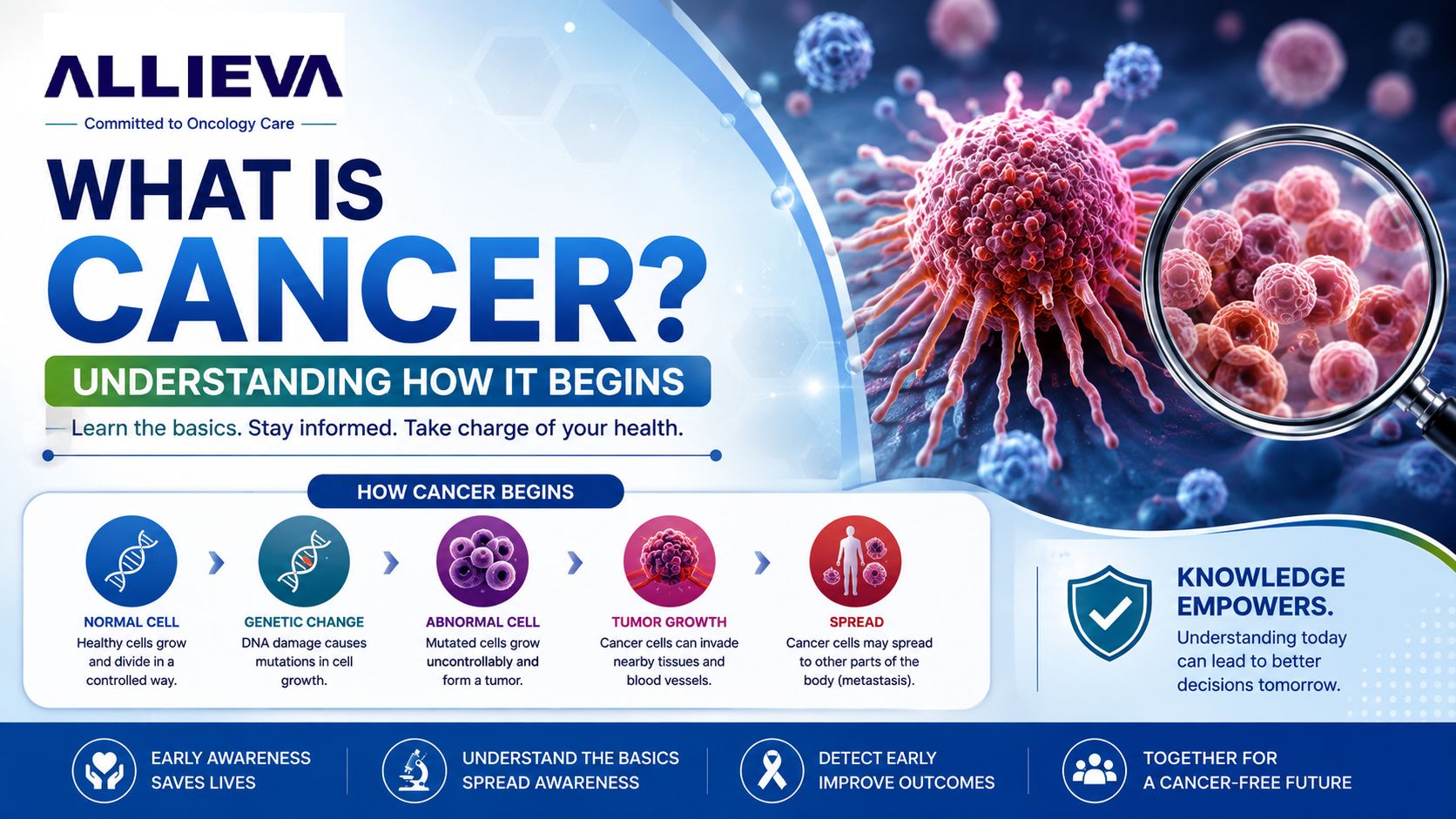
Cancer is a broad group of diseases in which abnormal cells grow and divide without normal control. These cells can sometimes invade nearby tissues and, in some cases, travel to other parts of the body. Although cancer can be a serious disease, advances in early detection, diagnosis, and treatment have improved outcomes for many patients.
Understanding how cancer begins, what causes cells to become abnormal, and how cancer can progress is an important part of cancer awareness. In this guide, we explain the basics of cancer in simple language and discuss the role of risk factors, genetics, early detection, and modern oncology treatment.
What Is Cancer?
Our body is made up of trillions of cells. Normally, cells follow an organized process: they grow, divide when needed, perform their functions, and eventually die when they are no longer required.
Cancer develops when changes occur in the genetic material of a cell and disrupt the normal controls over cell growth and survival.
As a result, abnormal cells may:
- Grow when they should not
- Continue dividing uncontrollably
- Avoid normal cell death
- Invade surrounding tissues
- Spread to other parts of the body
Cancer can begin in almost any tissue or organ, which is why there are many different types of cancer.
How Does Cancer Begin?
Cancer usually begins with changes in a cell's DNA.
DNA contains instructions that tell cells how to function. Certain genetic changes can affect genes responsible for controlling cell growth, cell division, and cell repair.
When enough important changes accumulate, a normal cell may gradually become abnormal.
A simplified process looks like this:
Normal Cell → Genetic Changes → Abnormal Cell Growth → Tumor Formation → Possible Spread
This process can happen over many years, although the timeline varies significantly between different types of cancer.
What Causes Cancer?
There is usually no single cause of cancer. Cancer can develop through a combination of genetic, environmental, and lifestyle factors.
Some important risk factors include:
Tobacco Use
Smoking and other forms of tobacco exposure are major risk factors for several cancers, particularly lung cancer.
Alcohol Consumption
Alcohol consumption is associated with an increased risk of several cancers, including cancers of the mouth, throat, esophagus, liver, breast, and colorectal region.
Unhealthy Lifestyle
Physical inactivity, excess body weight, and certain dietary patterns can contribute to the risk of some cancers.
Radiation Exposure
Certain types of radiation, including excessive ultraviolet radiation from sunlight, can damage DNA and increase cancer risk.
Infections
Some infections can contribute to cancer development. Examples include certain strains of human papillomavirus (HPV), hepatitis B virus, and hepatitis C virus.
Family History and Genetics
Some people inherit genetic changes that increase their susceptibility to particular cancers. However, having a family history of cancer does not necessarily mean a person will develop cancer.
Does Every Genetic Mutation Cause Cancer?
No.
Genetic changes occur naturally in cells throughout our lives. Many of these changes have no significant effect.
Cancer generally develops when particular changes affect genes that control important processes such as:
- Cell growth
- Cell division
- DNA repair
- Cell death
The accumulation of several significant changes can eventually cause a cell to behave abnormally.
What Is a Tumor?
A tumor is an abnormal mass of cells. Tumors can be either benign or malignant.
Benign Tumor
A benign tumor is not cancer. It generally does not invade nearby tissues or spread to distant parts of the body, although some benign tumors can still cause health problems depending on their size and location.
Malignant Tumor
A malignant tumor is cancerous. Cancer cells can invade surrounding tissues and may spread to distant organs.
Not all cancers form solid tumors. For example, leukemia is a cancer of blood-forming tissues and generally does not produce a typical solid tumor.
What Does Cancer Spread Mean?
When cancer cells move from their original location to another part of the body, the process is called metastasis.
For example, cancer that begins in the breast can sometimes spread to organs such as the bones, liver, lungs, or brain.
Importantly, metastatic cancer cells retain characteristics of the original cancer. For example, breast cancer that spreads to the lung is still breast cancer, rather than lung cancer.
Common Types of Cancer
Cancer can affect almost any part of the body. Some commonly diagnosed cancers include:
- Breast cancer
- Lung cancer
- Colorectal cancer
- Prostate cancer
- Cervical cancer
- Liver cancer
- Stomach cancer
- Ovarian cancer
- Kidney cancer
- Blood cancers such as leukemia and lymphoma
- Multiple myeloma
Each type of cancer behaves differently and may require a different approach to diagnosis and treatment.
What Are the Warning Signs of Cancer?
Cancer symptoms vary depending on the type and location of the disease. Some cancers may cause noticeable symptoms, while others can remain unnoticed during their early stages.
Possible warning signs include:
- Unexplained weight loss
- Persistent fatigue
- A new lump or swelling
- Unusual bleeding
- A persistent cough
- Changes in bowel or bladder habits
- Difficulty swallowing
- Persistent or unexplained pain
- Changes in a mole or skin lesion
- A sore that does not heal
These symptoms do not necessarily mean that someone has cancer. Many can be caused by non-cancerous conditions. However, persistent or unusual symptoms should be discussed with a healthcare professional.
Why Is Early Cancer Detection Important?
Early detection can make a significant difference in cancer care.
When cancer is diagnosed before it has spread extensively, treatment may be more effective and there may be more treatment options available.
Depending on the cancer type, early detection can involve:
- Routine screening
- Physical examinations
- Blood tests
- Imaging tests
- Biopsy
- Genetic or molecular testing
Screening recommendations vary according to age, sex, personal health history, family history, and cancer risk.
How Is Cancer Diagnosed?
Doctors may use several tests to determine whether cancer is present.
Medical History and Physical Examination
A doctor may ask about symptoms, medical history, family history, and lifestyle factors before performing a physical examination.
Imaging Tests
Depending on the suspected cancer, doctors may use:
- X-rays
- Ultrasound
- CT scans
- MRI scans
- PET scans
Biopsy
A biopsy involves removing a sample of tissue or cells for examination under a microscope. It is an important part of diagnosing many cancers.
Laboratory and Molecular Tests
Additional laboratory or molecular tests may help identify specific characteristics of cancer cells and guide treatment decisions.
How Is Cancer Treated?
Cancer treatment depends on several factors, including:
- Type of cancer
- Stage of cancer
- Grade of the tumor
- Molecular characteristics
- Location of the cancer
- Overall health of the patient
Common cancer treatments include:
Surgery
Surgery may be used to remove a localized tumor.
Chemotherapy
Chemotherapy uses medicines that target rapidly dividing cancer cells. It may be given before surgery, after surgery, or as part of treatment for advanced disease.
Radiation Therapy
Radiation uses high-energy radiation to damage cancer cells and control or destroy tumors.
Targeted Therapy
Targeted medicines act on specific molecular features involved in cancer growth or survival.
Immunotherapy
Immunotherapy helps the body's immune system recognize and attack cancer cells.
Hormone Therapy
Some cancers depend on hormones for their growth. Hormone therapy can reduce or block the effects of these hormones.
A patient may receive one treatment or a combination of several approaches.
The Role of Oncology Medicines
Modern oncology medicines have expanded the options available to healthcare professionals for managing different types of cancer.
At Allieva Pharma, our focus includes the development and supply of pharmaceutical products for oncology and other therapeutic areas.
Our oncology portfolio includes products such as:
PACLIEVA — Paclitaxel Injection
Paclitaxel is an antineoplastic medicine used in the treatment of several cancers, including certain breast, ovarian, and lung cancers. Its use depends on the patient's diagnosis and the treatment protocol prescribed by the healthcare professional.
REGOLIEVA — Regorafenib Tablets
Regorafenib is a multikinase inhibitor used for specific advanced cancers, including certain colorectal cancers, gastrointestinal stromal tumors, and hepatocellular carcinoma, according to approved indications.
ENZALIEVA — Enzalutamide Tablets
Enzalutamide is an androgen receptor inhibitor used in the treatment of certain forms of advanced prostate cancer.
CARFLIEVA — Carfilzomib for Injection
Carfilzomib is a proteasome inhibitor used as part of treatment regimens for multiple myeloma.
Important: Cancer medicines should only be used under the supervision of a qualified healthcare professional. The appropriate medicine, dose, combination, and duration depend on the individual patient's condition.
Can Cancer Be Prevented?
Not every cancer can be prevented. However, certain lifestyle and environmental changes can reduce the risk of developing some cancers.
Helpful measures include:
- Avoiding tobacco
- Limiting alcohol consumption
- Maintaining a healthy weight
- Staying physically active
- Eating a balanced diet
- Protecting skin from excessive ultraviolet radiation
- Following recommended vaccination schedules
- Reducing exposure to known carcinogens
- Participating in recommended cancer screening
Prevention and early detection work together to support better long-term health.
Cancer Awareness and Regular Health Check-Ups
Being aware of changes in your body is an important part of maintaining good health.
Regular medical check-ups can help identify potential health problems, while appropriate cancer screening can detect certain cancers before symptoms develop.
However, screening is not the same for everyone. Your healthcare professional can recommend screening based on your individual risk factors and applicable medical guidelines.
What Happens After a Cancer Diagnosis?
A cancer diagnosis does not look the same for every patient.
After diagnosis, doctors generally determine the type, stage, and grade of the cancer and may perform additional tests to understand its biological characteristics.
The medical team then develops an individualized treatment plan.
Patients may work with several healthcare professionals, including:
- Medical oncologists
- Surgical oncologists
- Radiation oncologists
- Pathologists
- Radiologists
- Oncology nurses
- Pharmacists
- Other supportive-care specialists
Good communication between patients and their healthcare team is an important part of cancer care.
Frequently Asked Questions About Cancer
What exactly is cancer?
Cancer is a group of diseases caused by abnormal cells that grow and divide without normal control. Some cancers can invade nearby tissues and spread to other parts of the body.
How does cancer start in the body?
Cancer can begin when genetic changes disrupt normal controls over cell growth, division, repair, and survival. Over time, additional changes may allow abnormal cells to grow and spread.
Is cancer always caused by lifestyle?
No. Cancer can result from a combination of genetic, environmental, infectious, lifestyle, and age-related factors. Some cancers develop without an identifiable preventable cause.
Is every tumor cancer?
No. Tumors can be benign or malignant. A malignant tumor is cancerous, while a benign tumor is not cancer.
Can cancer be cured?
Some cancers can be cured, particularly when detected and treated at an early stage. For other cancers, treatment may focus on controlling the disease, slowing its progression, reducing symptoms, and improving quality of life.
Can healthy lifestyle choices eliminate cancer risk?
No. Healthy habits can reduce the risk of some cancers but cannot completely eliminate the possibility of developing cancer.
Conclusion
Cancer begins when abnormal changes disrupt the normal behavior of cells. As these changes accumulate, cells may grow uncontrollably, form tumors, invade surrounding tissues, and sometimes spread to distant organs.
Understanding what cancer is and how it begins can help people recognize the importance of prevention, early detection, regular medical care, and appropriate treatment.
Cancer care has also advanced significantly, with chemotherapy, targeted therapy, immunotherapy, hormone therapy, radiation, surgery, and other approaches providing healthcare professionals with a broader range of treatment options.
At Allieva Pharma Pvt. Ltd., we are committed to supporting oncology care through a growing portfolio of pharmaceutical products and a continued focus on quality and healthcare needs.
Awareness is an important first step. Understanding cancer can help people make informed decisions about their health and seek professional medical advice when it matters.