Top 15 Early Warning Signs of Cancer You Should Never Ignore | Allieva Pharma
Learn about 15 possible early warning signs of cancer, when to see a doctor, and why early detection can make a difference in cancer care.

Learn about 15 possible early warning signs of cancer, when to see a doctor, and why early detection can make a difference in cancer care.
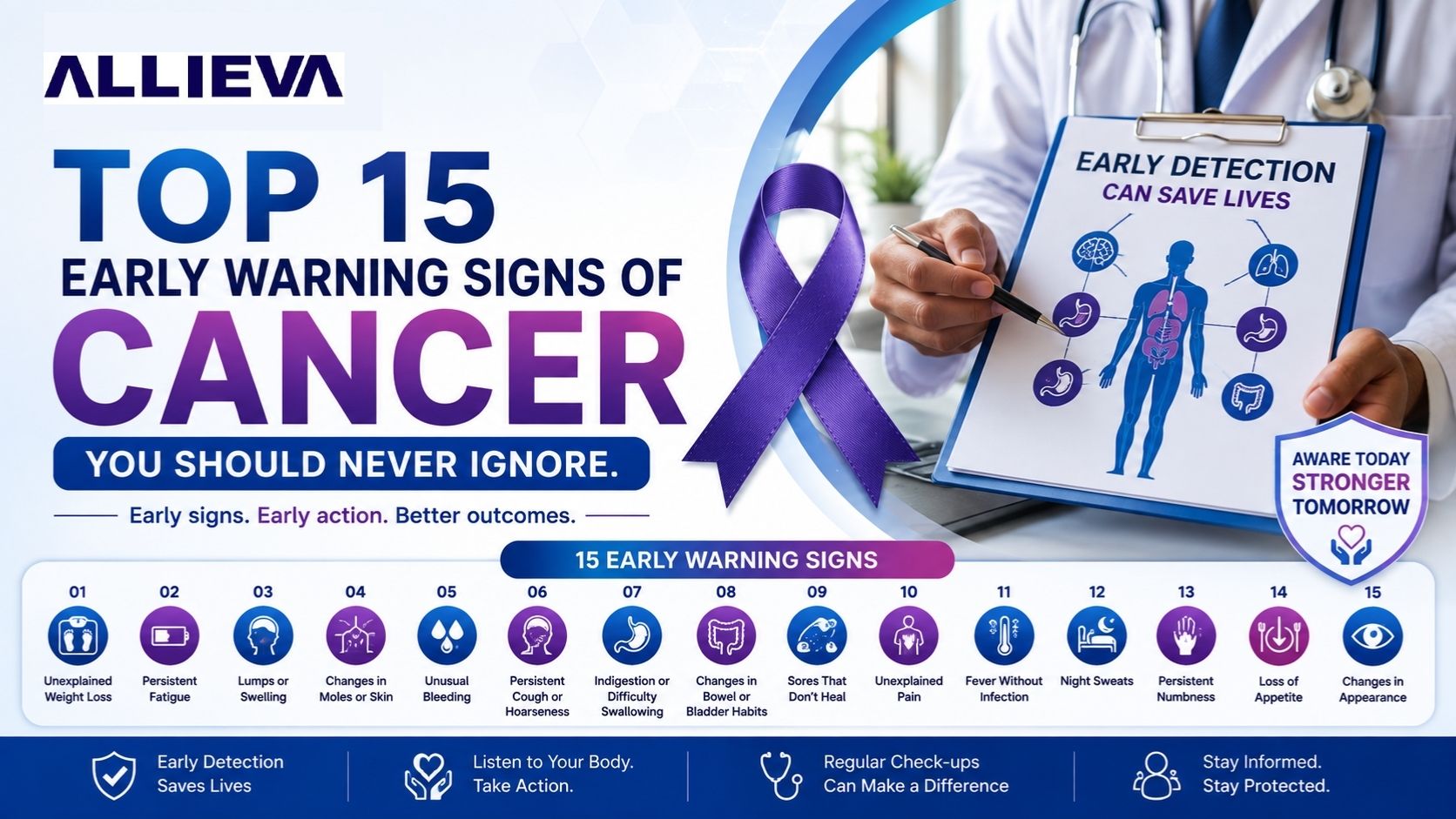
Written by Chandan Kumar | Published on Aug. 18, 2026
Cancer can sometimes develop without causing noticeable symptoms in its early stages. However, certain changes in the body may indicate that something needs medical attention. Recognizing these changes and discussing persistent or unusual symptoms with a healthcare professional can help identify health problems earlier.
It is important to remember that having one of these symptoms does not mean you have cancer. Many of these signs can be caused by infections, hormonal changes, lifestyle factors, or other non-cancerous conditions. However, symptoms that are new, persistent, worsening, or unexplained should not simply be ignored.
In this article, we discuss 15 early warning signs of cancer, why they can occur, and when it is important to seek medical advice.
Losing weight without intentionally changing your diet or exercise routine can sometimes be an important warning sign.
Unexpected weight loss may occur because certain cancers can affect metabolism, appetite, digestion, or the body's ability to use nutrients effectively.
For example, unexplained weight loss can sometimes be associated with cancers of the:
However, unexplained weight loss can have many other causes, including thyroid problems, diabetes, infections, digestive disorders, and emotional stress.
If you experience significant or ongoing unexplained weight loss, speak with a healthcare professional.
Everyone feels tired occasionally. However, persistent or unusual fatigue that does not improve with adequate rest deserves attention.
Cancer-related fatigue may occur because the disease can affect the body's energy levels. Anemia, nutritional deficiencies, inflammation, sleep problems, or treatment-related effects can also contribute to fatigue.
Persistent fatigue is not specific to cancer, but if it continues without an obvious explanation, medical evaluation can help identify the underlying cause.
A new lump, swelling, or thickened area anywhere on the body should be checked, particularly if it:
Breast, neck, armpit, abdomen, and groin lumps are examples of changes that may require medical evaluation.
Not every lump is cancer. Many are caused by cysts, infections, benign growths, or other conditions.
Changes in the skin can sometimes be associated with skin cancer.
Pay attention to a mole or skin lesion that changes in:
A useful approach is to watch for a mole that looks noticeably different from your other moles.
Other skin changes, such as a sore that does not heal, unusual bleeding, or persistent changes in the skin, should also be discussed with a healthcare professional.
Bleeding that cannot be explained by a normal or known cause should not be ignored.
Examples include:
The cause may not be cancer, but unexplained bleeding can be a symptom of several medical conditions and should be evaluated.
A cough caused by a common cold usually improves with time. A cough that persists, changes, or is accompanied by other symptoms deserves medical attention.
Potential warning signs include:
These symptoms can occur with many respiratory conditions, so a medical evaluation is necessary to determine the cause.
Ongoing indigestion, heartburn, abdominal discomfort, or difficulty swallowing can have many causes.
However, persistent or worsening symptoms may require further investigation.
Difficulty swallowing, sometimes called dysphagia, can affect the throat or esophagus and should be evaluated if it continues.
A lasting change in normal bowel or bladder function can sometimes be a warning sign.
Examples include:
These symptoms are commonly caused by conditions other than cancer, but persistent changes should be discussed with a healthcare professional.
A sore or wound that does not heal normally should be examined.
This is particularly important for persistent sores on the:
Some skin cancers and oral cancers can present as sores or lesions that fail to heal.
A healthcare professional can determine whether further testing is necessary.
Pain is one of the most common health complaints and is usually caused by conditions other than cancer.
However, persistent or unexplained pain can sometimes require further investigation.
Depending on the type of cancer, pain may occur in areas such as:
Pain that is severe, persistent, worsening, or associated with other unusual symptoms should be medically assessed.
Fever is often caused by infections. In some cases, however, persistent or unexplained fever may be associated with certain cancers, particularly cancers affecting the blood or immune system.
If fever continues without an obvious cause, medical evaluation can help identify the reason.
Occasional sweating at night can happen because of warm weather, heavy bedding, hormonal changes, medications, or infections.
However, repeated, unexplained, or drenching night sweats, especially when accompanied by fever, unexplained weight loss, or persistent fatigue, should be discussed with a doctor.
Night sweats can occur with several medical conditions and are not by themselves a diagnosis of cancer.
New or unexplained neurological symptoms should receive appropriate medical attention.
Depending on the underlying cause, symptoms may include:
These symptoms can have many causes, including nerve disorders, vitamin deficiencies, infections, stroke, and other neurological conditions.
Sudden neurological symptoms require urgent medical attention.
A temporary decrease in appetite is common during illness or periods of stress.
However, a persistent loss of appetite—especially when combined with unexplained weight loss, fatigue, abdominal symptoms, or other changes—should be evaluated.
Certain cancers can affect appetite through changes in metabolism, digestion, inflammation, or the production of substances that influence appetite.
Sometimes the earliest indication that something is wrong is simply a change that feels unusual for you.
This could include:
Knowing what is normal for your body makes it easier to recognize changes that may need attention.
You do not need to panic every time you experience one of these symptoms. Most of these signs have causes unrelated to cancer.
However, it is a good idea to consult a healthcare professional when a symptom:
Your doctor can review your symptoms, medical history, and risk factors and decide whether further testing or screening is appropriate.
Early detection can be an important part of successful cancer care.
When certain cancers are detected before they have spread extensively, treatment may be more effective and patients may have more treatment options.
Depending on the cancer type and individual risk, doctors may use:
Screening is particularly important because some cancers can be detected before symptoms appear.
Screening recommendations depend on factors such as age, sex, family history, personal health history, and individual risk.
Examples of cancer screening include:
Mammography may be recommended for eligible individuals according to applicable screening guidelines.
HPV testing and cervical cytology (Pap testing) are commonly used screening approaches.
Screening can include stool-based tests or colonoscopy, depending on individual circumstances and guidelines.
Low-dose CT screening may be recommended for certain people at high risk, particularly those with significant smoking histories.
PSA testing may be considered after discussing potential benefits and limitations with a healthcare professional.
A doctor can help determine which screenings are appropriate for you.
Some factors can increase the likelihood of developing cancer.
These may include:
Having a risk factor does not mean that someone will develop cancer. Similarly, cancer can occur in people without obvious risk factors.
Although not every cancer can be prevented, several healthy habits can help reduce the risk of certain cancers.
Not smoking and avoiding other tobacco products is one of the most effective ways to reduce cancer risk.
Regular physical activity helps maintain a healthy weight and is associated with a lower risk of several cancers.
Include plenty of vegetables, fruits, whole grains, legumes, and other nutritious foods as part of a balanced diet.
Excess body weight is associated with an increased risk of several cancers.
Reducing alcohol consumption can lower the risk of several alcohol-associated cancers.
Use appropriate sun protection and avoid excessive exposure to ultraviolet radiation.
Vaccination against infections such as HPV and hepatitis B can help prevent some cancers associated with these infections.
Appropriate screening can help detect certain cancers earlier, sometimes before symptoms develop.
At Allieva Pharma Pvt. Ltd., our focus includes supporting oncology care through a portfolio of pharmaceutical products.
Our oncology portfolio includes products such as:
Paclitaxel is an antineoplastic medicine used in the treatment of several cancers, including certain breast, ovarian, and lung cancers, depending on the approved indication and treatment protocol.
Regorafenib is a multikinase inhibitor used for specific advanced cancers, including certain colorectal cancers, gastrointestinal stromal tumors, and hepatocellular carcinoma, according to approved indications.
Enzalutamide is an androgen receptor inhibitor used for certain forms of advanced prostate cancer.
Carfilzomib is a proteasome inhibitor used as part of treatment regimens for multiple myeloma.
Allieva Pharma remains focused on quality, pharmaceutical innovation, and supporting healthcare professionals in the field of oncology.
Cancer medicines should always be used under the supervision of an appropriately qualified healthcare professional.
If you notice any of the following changes and they persist or are unexplained, consider discussing them with a healthcare professional:
There is no single warning sign that applies to every type of cancer. Symptoms vary depending on where the cancer develops. Unexplained weight loss, persistent fatigue, unusual lumps, abnormal bleeding, and persistent changes in normal body functions are among the symptoms that may warrant medical evaluation.
No. Most of these symptoms can be caused by conditions other than cancer. A healthcare professional can determine the likely cause through an appropriate medical evaluation.
Yes. Certain cancers can be detected through recommended screening tests before symptoms develop. Screening is different from diagnostic testing and is generally recommended based on individual risk and established guidelines.
Pay attention to persistent changes in your body, follow appropriate cancer screening recommendations, and seek medical advice when unusual symptoms do not resolve.
A healthy lifestyle can reduce the risk of several cancers, but it cannot completely eliminate cancer risk. Genetics, age, infections, environmental exposures, and other factors can also influence cancer development.
Do not assume that a lump is cancer. However, a new, persistent, growing, or unexplained lump should be evaluated by a healthcare professional.
Knowing the early warning signs of cancer does not mean living in fear. It means becoming more aware of your health and understanding when a change deserves professional attention.
A persistent cough, unexplained weight loss, unusual bleeding, a changing mole, a new lump, or another unexplained change may have a harmless cause—but it is better to have persistent symptoms evaluated rather than ignore them.
Early detection, appropriate screening, healthy lifestyle choices, accurate diagnosis, and timely treatment all play important roles in modern cancer care.
At Allieva Pharma Pvt. Ltd., we believe that greater awareness and access to quality oncology medicines can contribute to better cancer care.
Explore more pharma blogs and news from Allieva Pharma.