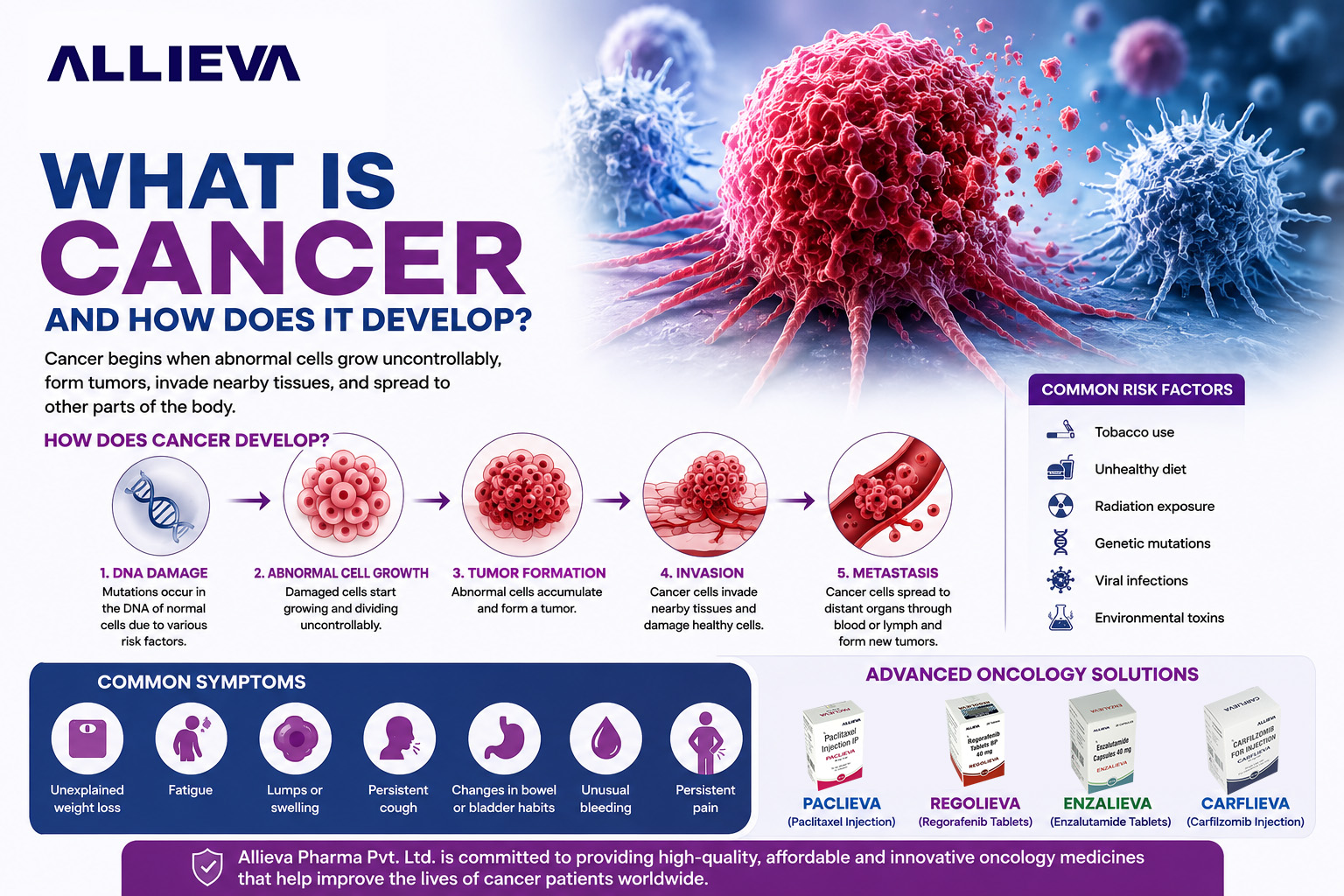
What Is Cancer and How Does It Develop?
Cancer is one of the most challenging health conditions affecting millions of people worldwide. Despite significant advancements in medical science, many people still have questions about what cancer actually is and how it develops inside the body. Understanding cancer is the first step toward prevention, early detection, and effective treatment.
In this article, we will explore what cancer is, how it develops, its common causes, symptoms, stages, and the latest treatment approaches available today.
What Is Cancer?
Cancer is a disease that occurs when certain cells in the body begin to grow uncontrollably. Normally, healthy cells grow, divide, and die in an organized manner. However, cancer cells ignore these natural controls and continue multiplying, eventually forming a mass called a tumor.
Not all tumors are cancerous. Tumors can be:
Benign Tumors
- Non-cancerous
- Do not spread to other parts of the body
- Usually less harmful
Malignant Tumors
- Cancerous
- Can invade nearby tissues
- May spread to distant organs through a process called metastasis
Cancer can develop almost anywhere in the body, including the lungs, breast, colon, prostate, blood, liver, and skin.
How Does Cancer Develop?
Cancer develops when changes, known as mutations, occur in the DNA of normal cells.
DNA acts as the instruction manual for every cell in the body. When DNA becomes damaged, cells may start behaving abnormally.
The development of cancer generally follows these stages:
1. DNA Damage
Various factors can damage cellular DNA, including:
- Tobacco use
- Exposure to harmful chemicals
- Radiation
- Viral infections
- Genetic inheritance
- Chronic inflammation
2. Abnormal Cell Growth
Damaged cells may begin dividing more rapidly than normal cells. Instead of repairing themselves or dying, they continue multiplying.
3. Tumor Formation
As abnormal cells accumulate, they form a tumor. Some cancers, such as leukemia, do not form solid tumors but affect the blood and bone marrow.
4. Invasion of Nearby Tissues
Cancer cells may invade surrounding tissues and organs, making treatment more complex.
5. Metastasis
In advanced stages, cancer cells can enter the bloodstream or lymphatic system and spread to other parts of the body.
This spread is known as metastasis and is often the most serious aspect of cancer.
Common Causes of Cancer
Although cancer can affect anyone, several risk factors increase the likelihood of developing the disease.
Tobacco Use
Smoking remains one of the leading causes of cancer worldwide and is strongly associated with lung, throat, and oral cancers.
Unhealthy Lifestyle
Poor diet, lack of physical activity, and obesity may increase cancer risk.
Genetic Factors
Some cancers are linked to inherited genetic mutations.
Environmental Exposure
Long-term exposure to harmful chemicals, pollution, and radiation can contribute to cancer development.
Viral Infections
Certain viruses such as HPV and Hepatitis B can increase the risk of specific cancers.
Common Symptoms of Cancer
Symptoms vary depending on the type and stage of cancer. Some common warning signs include:
- Unexplained weight loss
- Persistent fatigue
- Chronic pain
- Unusual lumps or swelling
- Changes in bowel or bladder habits
- Persistent cough
- Difficulty swallowing
- Changes in skin appearance
- Unexplained bleeding
Early detection significantly improves treatment outcomes.
Understanding Cancer Stages
Cancer is generally classified into stages:
Stage 0
Abnormal cells are present but have not spread.
Stage I
Cancer is small and localized.
Stage II and III
Cancer has grown and may have spread to nearby tissues or lymph nodes.
Stage IV
Cancer has spread to distant organs (metastatic cancer).
Treatment options often depend on the stage at diagnosis.
Modern Cancer Treatment Options
Advancements in oncology have improved survival rates and treatment effectiveness.
Chemotherapy
Uses specialized medicines to destroy rapidly growing cancer cells.
Targeted Therapy
Targets specific cancer-related genes or proteins.
Immunotherapy
Helps the body's immune system recognize and attack cancer cells.
Radiation Therapy
Uses high-energy radiation to kill cancer cells.
Surgery
Removes cancerous tissue when possible.
Many patients receive a combination of these treatments depending on their condition.
The Role of Oncology Medicines in Cancer Care
Modern oncology medicines play a critical role in improving patient outcomes and quality of life.
Companies such as Allieva Pharma are committed to providing high-quality oncology products that support healthcare professionals in managing various types of cancer.
Some of the oncology products offered by Allieva Pharma include:
PACLIEVA (Paclitaxel Injection)
Paclitaxel is widely used in the treatment of:
- Breast Cancer
- Ovarian Cancer
- Lung Cancer
- Kaposi Sarcoma
REGOLIEVA (Regorafenib Tablets)
Used in the treatment of:
- Metastatic Colorectal Cancer
- Gastrointestinal Stromal Tumors (GIST)
- Hepatocellular Carcinoma
ENZALIEVA (Enzalutamide Capsules/Tablets)
Commonly prescribed for:
CARFLIEVA (Carfilzomib Injection)
Used in the management of:
By focusing on quality, affordability, and accessibility, Allieva Pharma contributes to the growing demand for advanced oncology treatments across healthcare markets.
Why Early Detection Matters
One of the most effective ways to improve cancer outcomes is early diagnosis.
Benefits of early detection include:
- Better treatment success rates
- More treatment options
- Lower healthcare costs
- Improved quality of life
- Increased survival rates
Regular health screenings and awareness of cancer symptoms can help identify the disease before it progresses.
Conclusion
Cancer develops when genetic changes cause cells to grow uncontrollably and evade the body's natural regulatory systems. While cancer remains a significant global health challenge, advancements in medical research, diagnostics, and oncology medicines have transformed treatment possibilities.
Understanding how cancer develops helps individuals make informed decisions about prevention, screening, and treatment. With continued innovation in oncology therapies and the availability of advanced medicines from companies like Allieva Pharma, patients today have access to more effective treatment options than ever before.