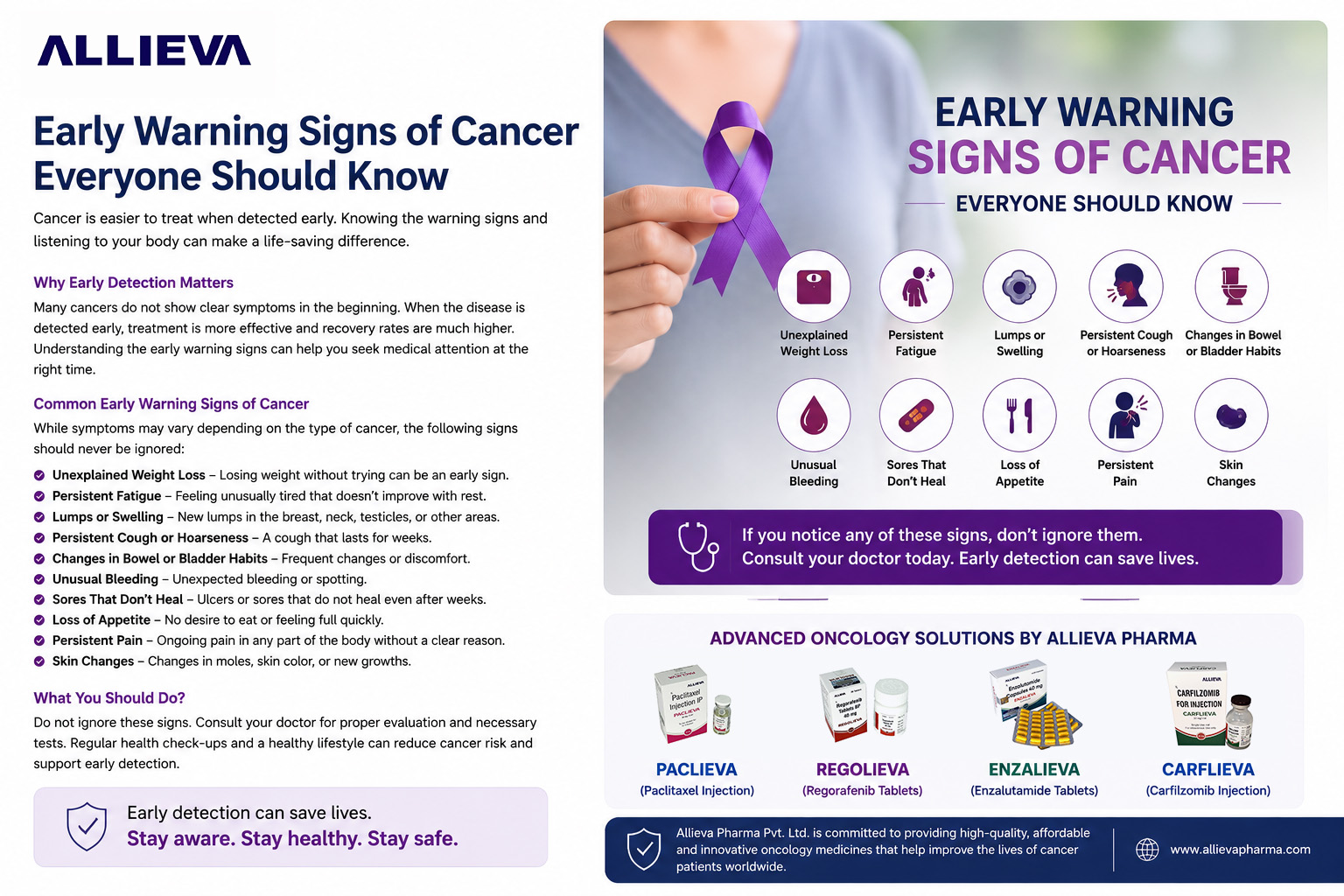
Early Warning Signs of Cancer Everyone Should Know
Cancer is one of the leading causes of death worldwide, but many types of cancer can be treated successfully when detected at an early stage. Unfortunately, people often ignore the first warning signs because they seem minor or are mistaken for common health problems.
Recognizing the early symptoms of cancer and seeking medical advice promptly can make a significant difference in treatment outcomes. In this guide, we'll discuss the most common early warning signs of cancer, why they occur, and when you should consult a healthcare professional.
Why Early Detection Is So Important
Cancer usually develops gradually. In many cases, the body starts sending warning signals long before the disease reaches an advanced stage.
Detecting cancer early offers several benefits:
- Better treatment success rates
- More treatment options
- Lower treatment costs
- Improved quality of life
- Higher survival rates
Regular health check-ups and paying attention to unusual changes in your body are essential steps toward early diagnosis.
Common Early Warning Signs of Cancer
Although symptoms vary depending on the type of cancer, there are several warning signs that should never be ignored.
1. Unexplained Weight Loss
Losing weight without changing your diet or exercise routine may be an early sign of cancers affecting the pancreas, stomach, lungs, or esophagus.
If you lose more than 5 kilograms unexpectedly, consult your doctor for proper evaluation.
2. Persistent Fatigue
Feeling tired after a busy day is normal, but fatigue that lasts for several weeks despite adequate rest could indicate an underlying medical condition, including cancer.
Persistent fatigue is commonly associated with:
- Leukemia
- Colon cancer
- Stomach cancer
3. A Lump or Swelling
Any new lump that continues growing or does not disappear should be examined by a healthcare professional.
Lumps may appear in:
- Breast
- Neck
- Testicles
- Underarms
- Groin
While many lumps are non-cancerous, early diagnosis is always recommended.
4. Persistent Cough or Hoarseness
A cough lasting longer than three weeks, especially if accompanied by blood or chest pain, may require medical attention.
Long-lasting hoarseness may also indicate throat or laryngeal cancer.
5. Changes in Bowel or Bladder Habits
Frequent constipation, persistent diarrhea, blood in stool, difficulty urinating, or blood in urine should never be ignored.
These symptoms may indicate:
- Colorectal cancer
- Bladder cancer
- Prostate cancer
6. Unusual Bleeding
Unexpected bleeding can sometimes be one of the earliest signs of cancer.
Examples include:
- Blood in stool
- Blood in urine
- Coughing up blood
- Abnormal vaginal bleeding
Immediate medical evaluation is recommended.
7. Sores That Do Not Heal
A mouth ulcer, skin wound, or sore that does not heal within a few weeks should be examined, especially in tobacco users.
Persistent sores may be linked to oral or skin cancers.
8. Difficulty Swallowing
Pain or difficulty while swallowing could indicate cancers affecting the throat or esophagus.
If swallowing becomes increasingly difficult, consult your physician.
9. Skin Changes
Watch for:
- New moles
- Changes in mole size or color
- Non-healing skin lesions
- Dark patches or unusual pigmentation
These changes may indicate skin cancer and should be evaluated promptly.
10. Persistent Pain
Pain that continues for several weeks without an obvious cause should not be ignored.
Although pain alone does not necessarily mean cancer, it deserves medical assessment.
Who Is at Higher Risk?
Several factors can increase the risk of developing cancer, including:
- Smoking and tobacco use
- Excessive alcohol consumption
- Obesity
- Family history of cancer
- Exposure to harmful chemicals
- Radiation exposure
- Viral infections such as HPV and Hepatitis B
- Lack of physical activity
Reducing these risk factors can help lower the chances of developing many cancers.
Can Cancer Be Prevented?
Although not every cancer is preventable, adopting healthy lifestyle habits can significantly reduce your risk.
Healthy habits include:
- Quit smoking
- Eat a balanced diet rich in fruits and vegetables
- Exercise regularly
- Maintain a healthy weight
- Protect your skin from excessive sunlight
- Limit alcohol consumption
- Get recommended vaccinations
- Attend routine health screenings
Modern Advances in Cancer Treatment
Medical science has made remarkable progress in cancer treatment over the past decade.
Today's treatment options include:
- Chemotherapy
- Targeted Therapy
- Immunotherapy
- Radiation Therapy
- Surgery
- Precision Medicine
The right treatment depends on the type, stage, and overall health of the patient.
Allieva Pharma's Commitment to Oncology Care
At Allieva Pharma, we are committed to supporting healthcare professionals with high-quality oncology medicines that contribute to effective cancer treatment.
Our oncology portfolio includes trusted products such as:
- PACLIEVA (Paclitaxel Injection) – Used in the treatment of breast, ovarian, lung, and other cancers.
- REGOLIEVA (Regorafenib Tablets) – Prescribed for metastatic colorectal cancer, gastrointestinal stromal tumors (GIST), and liver cancer.
- ENZALIEVA (Enzalutamide Tablets) – Indicated for advanced prostate cancer.
- CARFLIEVA (Carfilzomib Injection) – Used in the management of multiple myeloma.
With a strong focus on quality, innovation, and patient care, Allieva Pharma continues to support better oncology outcomes through reliable pharmaceutical solutions.
When Should You See a Doctor?
Seek medical advice if any unusual symptom:
- Lasts longer than two to three weeks
- Continues to worsen
- Returns repeatedly
- Interferes with daily life
Early diagnosis can improve treatment outcomes and increase the chances of successful recovery.
Final Thoughts
Many cancers begin with subtle symptoms that are easy to overlook. Paying attention to your body and recognizing the early warning signs of cancer can make a life-saving difference.
While these symptoms do not always indicate cancer, they should never be ignored. Timely consultation with a healthcare professional and appropriate diagnostic tests are essential for accurate diagnosis and effective treatment.
At Allieva Pharma, we remain dedicated to advancing oncology care by providing high-quality cancer medicines that help healthcare providers deliver effective treatment to patients around the world.
Frequently Asked Questions (FAQs)
What are the first warning signs of cancer?
Common early warning signs include unexplained weight loss, persistent fatigue, lumps, unusual bleeding, long-lasting cough, skin changes, and difficulty swallowing.
Does every cancer show symptoms early?
No. Some cancers develop silently, which is why routine health screenings are important, especially for high-risk individuals.
Can early-stage cancer be cured?
Many early-stage cancers have significantly higher treatment success rates when diagnosed and treated promptly.
Which cancers are most common?
Breast, lung, colorectal, prostate, stomach, liver, and cervical cancers are among the most commonly diagnosed cancers worldwide.