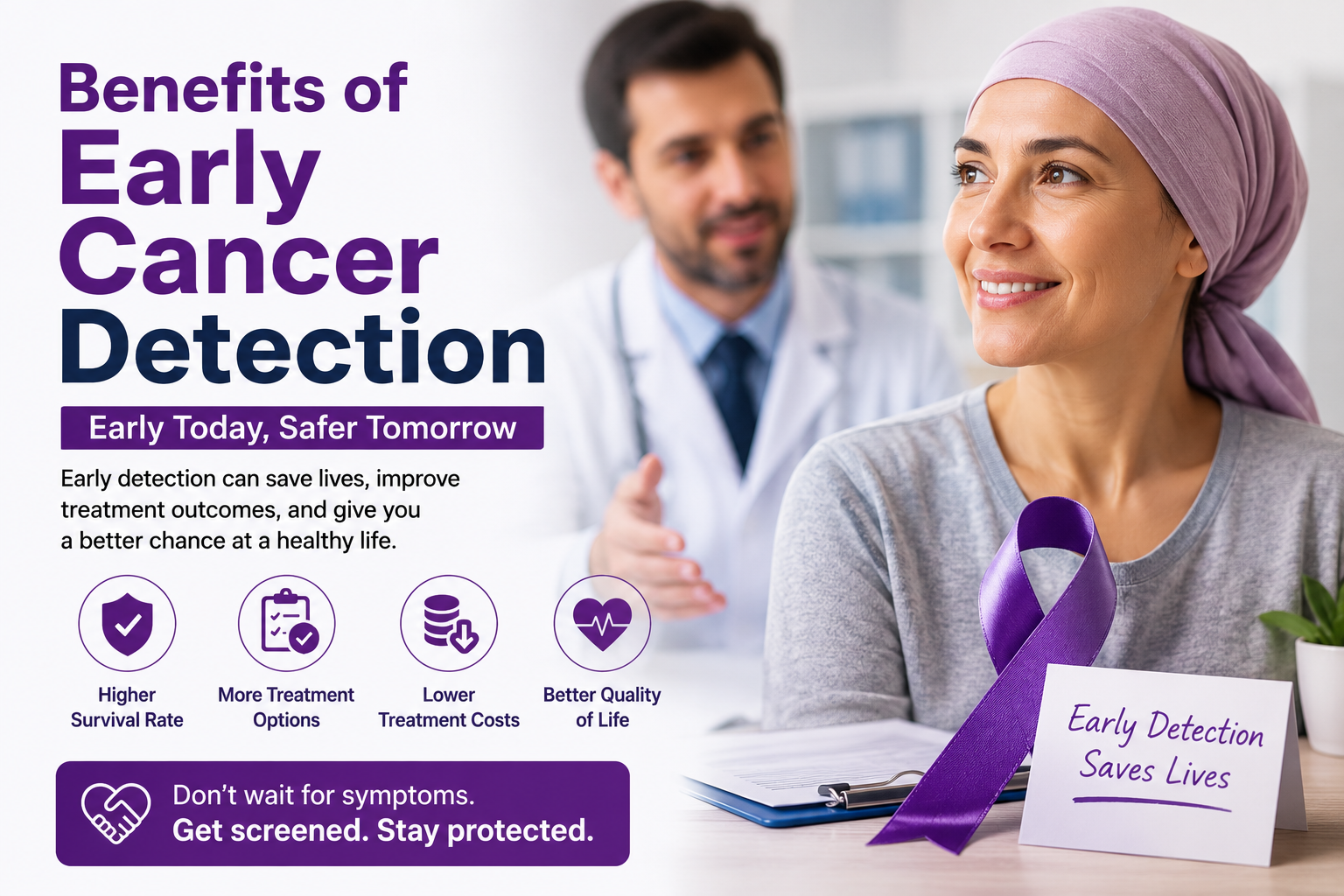
Cancer is one of the leading health challenges across the world, affecting millions of people every year. While advances in medical science have significantly improved cancer treatment, one factor continues to have the greatest impact on survival—early detection.
Many cancers develop silently, showing few or no symptoms during the initial stages. By the time noticeable symptoms appear, the disease may have already progressed. This is why regular health check-ups, cancer screenings, and awareness of early warning signs are essential.
In this article, we explain the major benefits of early cancer detection, why screening matters, and how modern oncology treatments are helping patients achieve better outcomes.
What Is Early Cancer Detection?
Early cancer detection refers to identifying cancer before it spreads to other parts of the body. It can happen through routine screening tests or by investigating symptoms at an early stage.
When cancer is diagnosed early, treatment is usually simpler, more effective, and less expensive.
Why Early Detection Matters
Cancer begins when abnormal cells grow uncontrollably. In the early stages, these cells are often confined to one area of the body.
If detected before they spread, doctors have a much greater chance of removing or treating the cancer successfully.
Many common cancers—including breast, colorectal, cervical, prostate, and lung cancer—have significantly better survival rates when diagnosed early.
Top Benefits of Early Cancer Detection
1. Higher Survival Rates
The greatest benefit of early diagnosis is improved survival.
Patients diagnosed during Stage I or Stage II often respond much better to treatment than those diagnosed at advanced stages.
Early treatment can prevent cancer from spreading and improve long-term health outcomes.
2. More Treatment Options
When cancer is found early, doctors usually have more treatment choices available.
These may include:
- Surgery
- Radiation therapy
- Chemotherapy
- Targeted therapy
- Immunotherapy
Advanced cancers often require multiple complex treatments, whereas early-stage cancers may need only one primary treatment.
3. Less Aggressive Treatment
Early-stage cancers often require less intensive treatment.
This means patients may experience:
- Shorter recovery time
- Fewer side effects
- Lower risk of complications
- Better quality of life during treatment
4. Lower Treatment Costs
Cancer treatment can be expensive, especially when diagnosed at an advanced stage.
Early diagnosis may reduce healthcare expenses because:
- Fewer treatment sessions are needed
- Hospital stays are shorter
- Less complex procedures are required
- Recovery is generally faster
Early detection is not only good for health but also financially beneficial for patients and families.
5. Better Quality of Life
Patients diagnosed early often maintain a better quality of life throughout treatment.
They are more likely to continue daily activities, spend time with family, and recover more quickly than patients facing advanced disease.
6. Reduced Risk of Cancer Spread
One of the biggest concerns in cancer care is metastasis—the spread of cancer to other organs.
Detecting cancer before it spreads greatly improves the chances of successful treatment and long-term survival.
Common Cancer Screening Tests
Regular screening helps identify certain cancers before symptoms appear.
Common screening tests include:
Breast Cancer
Cervical Cancer
Colorectal Cancer
- Colonoscopy
- Stool-based screening tests
Prostate Cancer
Lung Cancer
- Low-dose CT Scan (recommended for high-risk individuals)
Always consult your healthcare provider to determine which screening tests are appropriate based on your age, family history, and overall health.
Who Should Consider Regular Cancer Screening?
You may benefit from regular screening if you:
- Are over the age of 40 or as advised by your physician
- Have a family history of cancer
- Smoke or have smoked in the past
- Have obesity or diabetes
- Are exposed to harmful chemicals
- Have chronic viral infections such as HPV or Hepatitis B
Even healthy individuals should attend routine medical check-ups as recommended by their healthcare provider.
How to Reduce Your Risk of Cancer
While not every cancer can be prevented, healthy lifestyle choices can reduce your overall risk.
Helpful habits include:
- Avoid tobacco products
- Eat a balanced diet rich in fruits and vegetables
- Exercise regularly
- Maintain a healthy body weight
- Limit alcohol intake
- Protect your skin from excessive sun exposure
- Get vaccinated against HPV and Hepatitis B where appropriate
- Attend regular health screenings
The Role of Advanced Oncology Medicines
Modern oncology medicines have transformed cancer treatment by offering more targeted and effective therapies.
At Allieva Pharma, we are committed to supporting healthcare professionals and patients with high-quality oncology medicines that meet international quality standards.
Our oncology portfolio includes:
PACLIEVA (Paclitaxel Injection)
Used in the treatment of breast cancer, ovarian cancer, lung cancer, and Kaposi sarcoma.
REGOLIEVA (Regorafenib Tablets)
Prescribed for metastatic colorectal cancer, gastrointestinal stromal tumors (GIST), and liver cancer.
ENZALIEVA (Enzalutamide Tablets)
Used in the treatment of advanced prostate cancer.
CARFLIEVA (Carfilzomib Injection)
Indicated for the treatment of multiple myeloma.
By focusing on innovation, quality, and patient care, Allieva Pharma continues to support better cancer treatment outcomes across healthcare systems.
When Should You Visit a Doctor?
Schedule a medical consultation if you notice:
- Unexplained weight loss
- Persistent fatigue
- A lump or swelling
- Blood in urine or stool
- Difficulty swallowing
- Persistent cough
- Changes in bowel or bladder habits
- A sore that does not heal
Ignoring symptoms can delay diagnosis and reduce treatment effectiveness.
Conclusion
Early cancer detection is one of the most powerful tools in the fight against cancer. It increases survival rates, expands treatment options, reduces healthcare costs, and improves the quality of life for patients.
Routine screenings, awareness of warning signs, and timely medical consultation can make a life-saving difference.
At Allieva Pharma, we remain dedicated to supporting better cancer care through trusted oncology medicines and a commitment to improving patient outcomes worldwide.
Frequently Asked Questions (FAQs)
Why is early cancer detection important?
Early detection allows treatment to begin before cancer spreads, improving survival rates and treatment success.
Can cancer be detected before symptoms appear?
Yes. Many cancers can be identified through routine screening tests before noticeable symptoms develop.
Which cancers should be screened regularly?
Breast, cervical, colorectal, prostate, and lung cancers are among the most commonly screened cancers.
Does early detection reduce treatment costs?
In many cases, yes. Early-stage cancer often requires less extensive treatment, shorter hospital stays, and faster recovery.