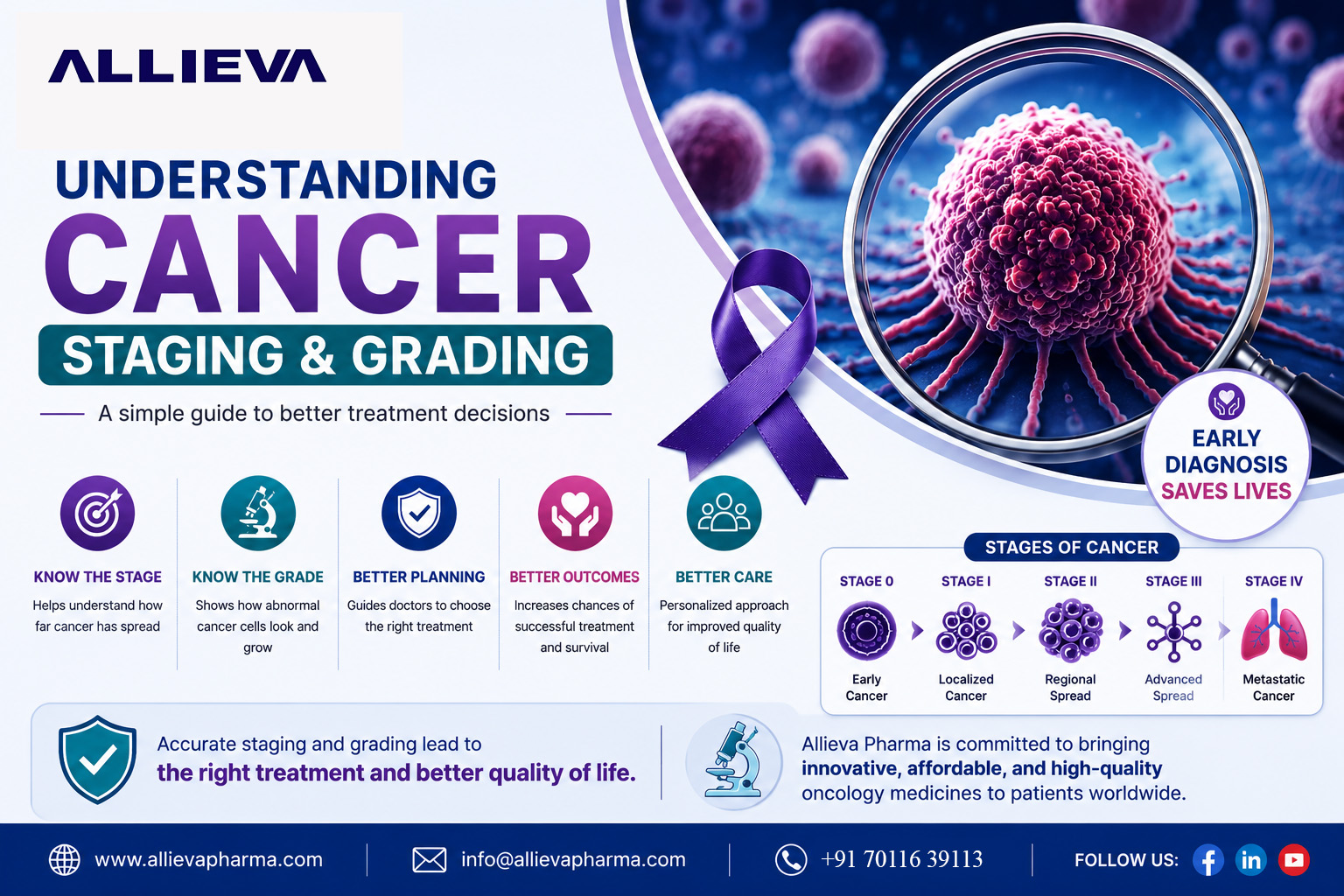
Understanding Cancer Staging and Grading: A Complete Guide
Receiving a cancer diagnosis can feel overwhelming, and one of the first things patients often hear from their doctor is the cancer's stage and grade. Although these terms sound similar, they describe two different aspects of the disease. Understanding them can help patients and their families make informed decisions about treatment and know what to expect during the journey ahead.
In this guide, we'll explain what cancer staging and grading mean, how they are determined, and why they are so important in planning effective cancer treatment.
What Is Cancer Staging?
Cancer staging is a way of describing how much cancer is present in the body and how far it has spread. Doctors use staging to understand the size of the tumor, whether nearby lymph nodes are involved, and whether the cancer has spread to other organs.
Knowing the stage of cancer helps doctors:
- Choose the most appropriate treatment
- Estimate the chances of recovery
- Monitor treatment progress
- Compare treatment outcomes across patients
The TNM Staging System
The most widely used staging method is the TNM system, developed to provide a standardized way of describing many types of cancer.
T – Tumor
This indicates the size of the primary tumor and whether it has grown into nearby tissues.
N – Nodes
This shows whether the cancer has spread to nearby lymph nodes.
M – Metastasis
This indicates whether the cancer has spread to distant organs such as the lungs, liver, bones, or brain.
The combination of T, N, and M helps determine the overall stage of cancer.
Understanding the Stages of Cancer
Stage 0 – Carcinoma in Situ
This is the earliest stage of cancer. Abnormal cells are present but have not spread to nearby tissues. Early treatment at this stage often leads to excellent outcomes.
Stage I – Early-Stage Cancer
The tumor is small and localized. It has not spread to lymph nodes or distant organs.
Patients diagnosed at this stage generally have the highest treatment success rates.
Stage II – Localized Spread
The cancer has grown larger or may have spread to nearby lymph nodes but has not reached distant organs.
Treatment may include surgery, chemotherapy, radiation therapy, or a combination of these approaches.
Stage III – Regional Spread
Cancer has spread to nearby tissues or multiple lymph nodes. More comprehensive treatment is usually required.
Treatment plans often combine surgery with chemotherapy, targeted therapy, or radiation therapy.
Stage IV – Advanced or Metastatic Cancer
At this stage, cancer has spread to distant organs.
Although Stage IV cancer is more challenging to treat, advances in oncology—including targeted therapies and immunotherapy—have improved outcomes and quality of life for many patients.
What Is Cancer Grading?
While staging describes where the cancer is, grading describes how the cancer cells look under a microscope.
Pathologists compare cancer cells with healthy cells to determine how abnormal they appear.
This helps predict how quickly the cancer is likely to grow and spread.
Cancer Grades Explained
Grade 1 (Low Grade)
Cancer cells look similar to normal cells and usually grow slowly.
These cancers tend to have a better prognosis.
Grade 2 (Intermediate Grade)
The cancer cells look somewhat different from normal cells and may grow at a moderate rate.
Grade 3 (High Grade)
Cancer cells appear very abnormal and usually grow more rapidly.
These cancers often require more aggressive treatment.
Grade 4 (Undifferentiated)
The cells are highly abnormal and difficult to identify.
These cancers typically grow and spread quickly and require intensive treatment.
What Is the Difference Between Staging and Grading?
Although the terms are often used together, they provide different information.
| Cancer Staging |
Cancer Grading |
| Describes how far cancer has spread |
Describes how abnormal the cancer cells look |
| Determines the extent of disease |
Indicates how quickly the cancer may grow |
| Helps plan treatment |
Helps predict tumor behavior |
| Uses the TNM system |
Uses Grade 1 to Grade 4 |
Both staging and grading are essential for creating a personalized treatment plan.
How Do Doctors Determine the Stage and Grade?
Doctors use several diagnostic tests, including:
- Physical examination
- Blood tests
- CT Scan
- MRI Scan
- PET Scan
- Ultrasound
- Biopsy
- Pathology reports
The biopsy is especially important because it confirms the diagnosis and allows pathologists to determine the cancer grade.
Why Cancer Staging and Grading Matter
Accurate staging and grading help doctors:
- Select the most effective treatment
- Predict the likely outcome of the disease
- Decide whether surgery is appropriate
- Monitor treatment response
- Plan long-term follow-up care
They also help patients better understand their condition and treatment journey.
Modern Treatment Options Based on Cancer Stage
Treatment depends on several factors, including the stage, grade, type of cancer, and the patient's overall health.
Common treatment options include:
Surgery
Often recommended for localized cancers.
Chemotherapy
Uses medicines to destroy rapidly growing cancer cells.
Radiation Therapy
Uses high-energy radiation to target cancer cells.
Targeted Therapy
Focuses on specific molecules that help cancer grow.
Immunotherapy
Helps the body's immune system recognize and attack cancer cells.
Allieva Pharma's Commitment to Oncology Care
At Allieva Pharma, we are dedicated to supporting healthcare professionals with high-quality oncology medicines that help improve patient outcomes.
Our oncology product portfolio includes:
PACLIEVA (Paclitaxel Injection)
Used in the treatment of breast cancer, ovarian cancer, lung cancer, and Kaposi sarcoma.
REGOLIEVA (Regorafenib Tablets)
Indicated for metastatic colorectal cancer, gastrointestinal stromal tumors (GIST), and hepatocellular carcinoma.
ENZALIEVA (Enzalutamide Tablets)
Prescribed for advanced prostate cancer.
CARFLIEVA (Carfilzomib Injection)
Used in the treatment of multiple myeloma.
By focusing on quality, innovation, and affordability, Allieva Pharma continues to support better cancer care across healthcare systems.
Frequently Asked Questions (FAQs)
What is the difference between cancer stage and grade?
The stage describes how far the cancer has spread, while the grade indicates how abnormal the cancer cells appear and how quickly they may grow.
Which stage of cancer is the most serious?
Stage IV is considered the most advanced stage because the cancer has spread to distant organs.
Can early-stage cancer be cured?
Many Stage I and Stage II cancers can be treated successfully, especially when diagnosed early.
Does every cancer use the TNM staging system?
The TNM system is widely used for many solid tumors, but some cancers, such as leukemia and certain brain tumors, use different classification systems.
Conclusion
Understanding cancer staging and grading is essential for anyone facing a cancer diagnosis. These two factors help doctors evaluate the extent of the disease, predict its behavior, and choose the most effective treatment strategy.
While hearing terms like "Stage III" or "Grade 2" can be intimidating, advances in cancer diagnosis and treatment continue to improve outcomes for patients worldwide. Early diagnosis, accurate staging, and access to high-quality oncology medicines all play a crucial role in successful cancer care.
At Allieva Pharma, we are committed to supporting the fight against cancer by providing trusted oncology medicines that meet high standards of quality, safety, and effectiveness.